Okay, so check this out—I’ve been poking around Solana explorers for years. Whoa! The first hit is usually the interface: uncluttered, fast, and sometimes annoyingly terse. Initially I thought speed alone would sell me on a tool, but then I realized that good search, clear transaction detail, and reliable indexing matter more than raw milliseconds. On the other hand, usability often hides rough edges that you only notice after heavy use, though actually I keep finding small surprises that make the difference when troubleshooting complex transfers or smart contract interactions.
Really? Yes — really. My instinct said the explorer should behave like a debugger. So I treat it like one. That changed how I evaluate features, and somethin’ about that feels overdue in our space. I’m biased, but if you’re tracking many wallets or on-chain programs, you need filters and view modes that don’t lie to you or obscure fees and inner instructions.
Here’s the thing. Simple explorers show you balances and transaction hashes. Medium ones show inner instructions and token movements. The best ones let you trace a token path across multiple accounts and programs, which is exactly what you need when a swap or multisig does weird things. And yes, this matters for audits and when you’re trying to verify whether an on-chain transfer failed or the wallet app messed up.
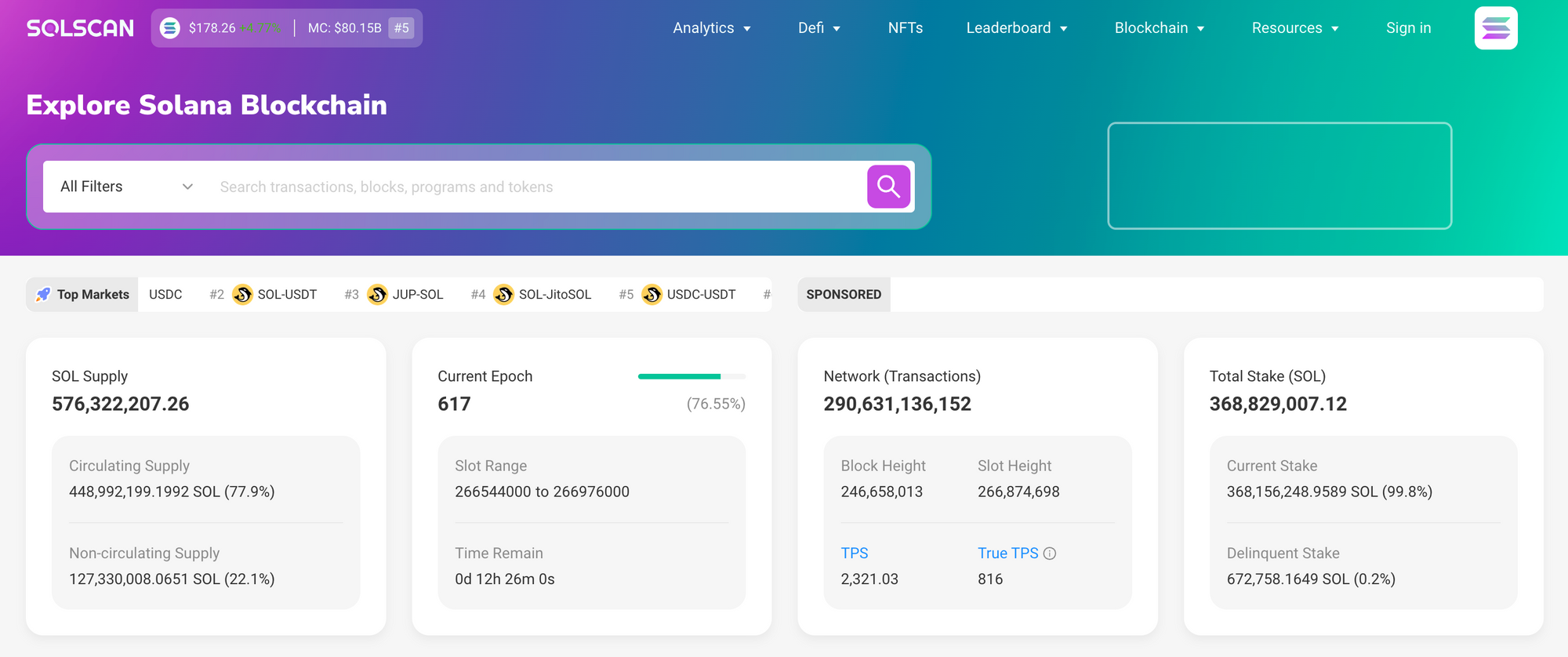
What I Use Solscan For (And Why It Sticks)
At a glance, solscan gives the quick things right. Hmm… the search box is responsive and forgiving. You paste a signature or wallet and you get a clean activity timeline that’s easy to skim. But the deeper stuff is where it stands apart — parsed instructions, token balance deltas, and program logs that expose failures without rabbit-holing into raw logs only.
On the technical side, the way it surfaces program accounts and decoded instruction sets speeds up investigation. Initially I thought raw RPC calls were enough, but actually parsing and presenting decoded data saves dozens of debugging cycles, especially when you’re juggling SPL tokens or wrapped assets across DEXs. (oh, and by the way… this saves headaches during client integrations.)
Seriously? Yes. For example, when an automated market maker re-routed liquidity unexpectedly, solscan’s instruction view made the culprit obvious in under ten minutes, whereas raw logs took much longer to interpret. My gut says that this kind of clarity prevents mistakes from compounding, and that matters when money is moving.
What bugs me about some explorers is their tendency to hide inner transactions or not attribute lamport flows properly. That obscures gas sinks and misleads people about who paid what. Solscan rarely does that; it shows token transfers and fee breakdowns in context, which helps teams reconcile on-chain vs. off-chain accounting faster than you’d expect.
How I Walk Through a Transaction — A Short Recipe
Step one: paste the signature. Step two: glance at status and fee. Step three: open the instruction decoder and scan inner calls for token movements. Step four: cross-check the account balances snapshot just before and after the tx. Boom. You have the who, what, and sometimes the why. It sounds trivial. It isn’t.
Sometimes you need to go further — like fetching the account history for a program or examining recent confirmed blocks. That’s when solscan’s program page and enriched filters pay off. Follow the token mint link and you can see holders, supply changes, and recent mint/burn events without jumping between dozens of tabs.
On a personal note, I once chased a bug for a client where transfers were visible but tokens never arrived in the expected account. Initially I thought the wallet was wrong, but decoded instructions showed a CPI into a wrapped token program, and that cleared things up fast. That kind of clarity is why I keep returning.
Tips for Power Users
Use the advanced filters. Seriously, don’t sleep on those. You can filter by instruction type, program ID, or token mint to isolate a pattern of behavior across many transactions. Combine that with exporting CSV snapshots for offline reconciling and you have a repeatable workflow.
Pro tip: watch the block confirmations and check logs for retries and inner errors. Sometimes a transaction will succeed but downstream CPI will fail silently in a way that only shows in logs. My experience says that digging into program logs is where you either save the day or learn a new thing about how composable Solana programs can be.
Also, use the token holder list to find concentration risk. If a few addresses control a large percentage of a mint, that’s a red flag for front-running, rug risk, or governance centralization. It’s not always catastrophic, but it’s very very important to know.
FAQ — Quick Answers From Practice
How accurate are Solscan’s decoded instructions?
Pretty accurate most of the time. Decoding relies on known program schemas and on-chain data; for custom programs or novel instruction sets some fields may be raw or incomplete. Initially I thought decoding was foolproof, but actually it can miss proprietary encodings — so validate against on-chain program source when possible.
Can I rely on it for audits?
Yes for preliminary analysis and triage. For formal audits you still need raw RPC logs, bytecode review, and contextual off-chain info. Solscan speeds the first-pass work, but don’t replace deeper tooling when stakes are high.
Is it better than other explorers?
Depends. Some explorers excel at block-level analytics or have different UX priorities. Solscan’s sweet spot is practical transaction forensics and token visibility, which suits devs and ops folks. I’m biased, but for Solana transaction inspection it’s one of the top choices I’ve used.
Okay — one last plug, and not a loud one: if you want to try it right now, check solscan and poke around a few recent transactions from a DEX or popular mint. You’ll see what I mean; it’s immediate and, yeah, satisfying. There’s a rhythm to tracing a transaction that feels a bit like detective work, and good tooling makes that rhythm smoother.
I’ll be honest: nothing’s perfect. Sometimes indices lag or a rarely-used program won’t decode cleanly. But most days solscan returns readable results fast, and that reliability is what matters when your job is to untangle failures or verify flows for clients. Somethin’ about that gives me confidence in the chain—not blind confidence, mind you, but practical confidence that I can follow the money when needed.
So if you’re knee-deep in Solana work, or just curious about how funds move on-chain, give it a run. You’ll learn patterns quickly and avoid repeating old mistakes. Oh—and expect to tweak your mental model a few times, because on-chain behavior keeps surprising you, and that’s part of the fun.